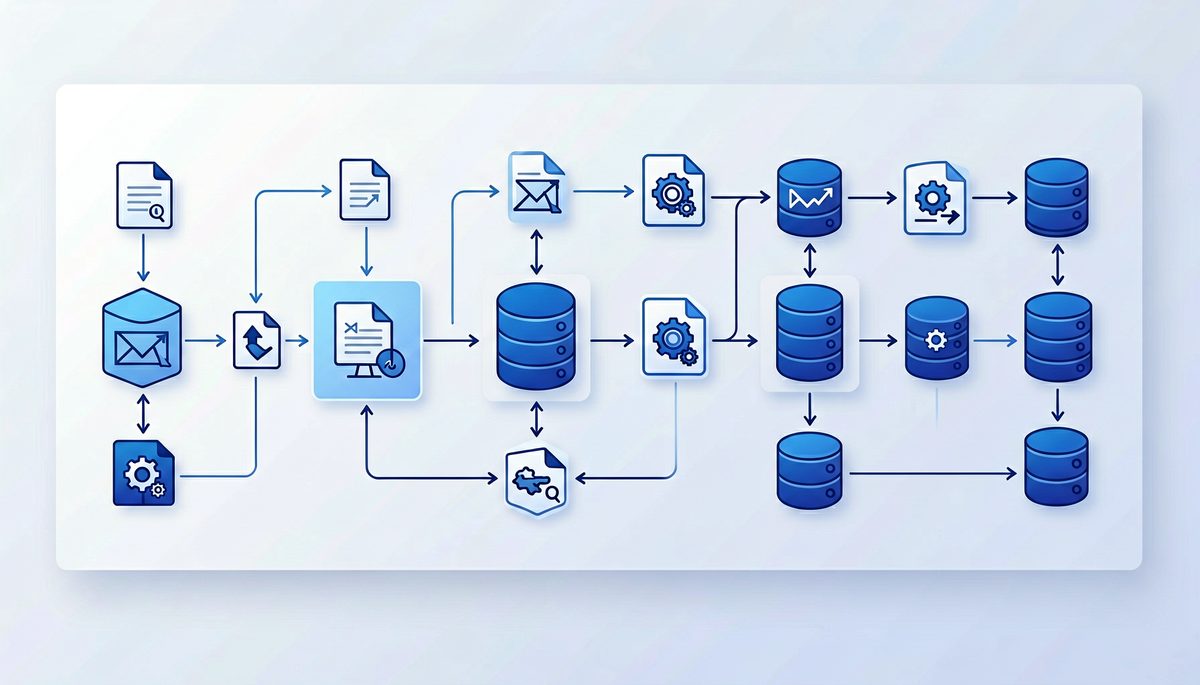
ActiveMQ Series - Overview
TL;DR Messaging middleware solves two core problems — decoupling and load leveling. ActiveMQ is the most complete implementation of the JMS specification
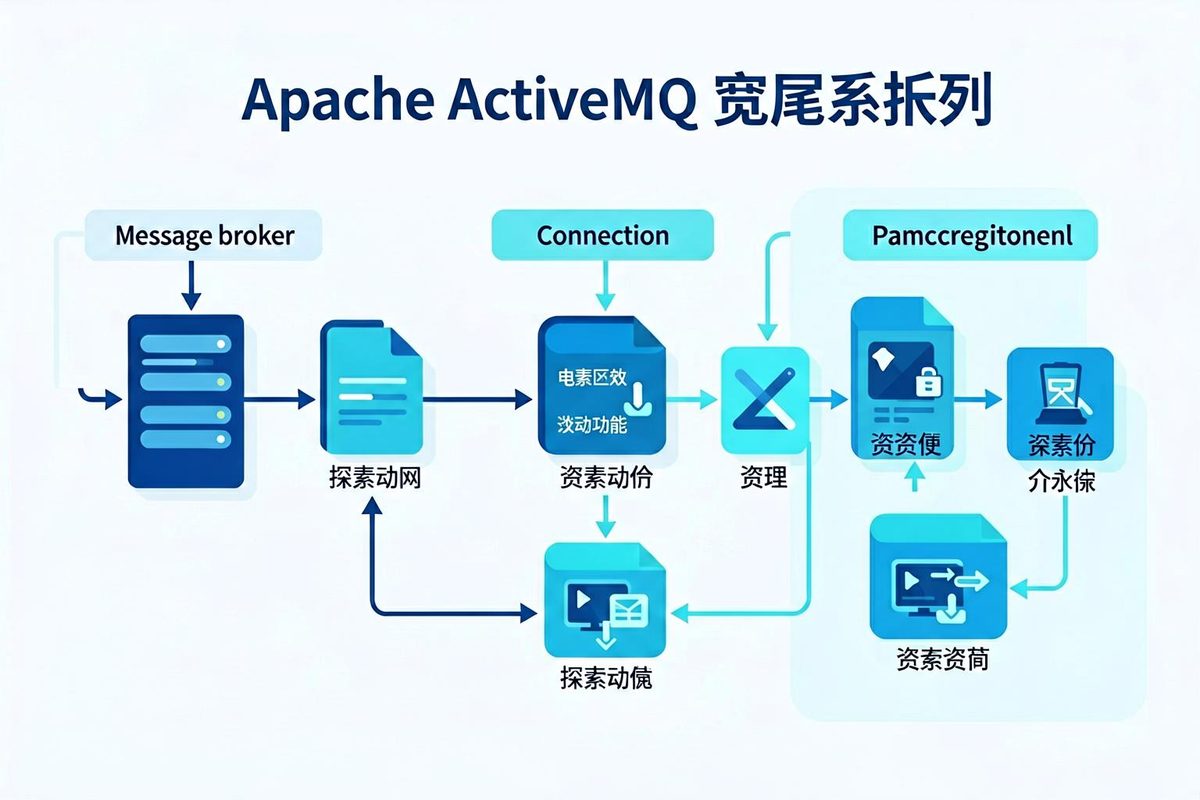
ActiveMQ is an open-source messaging middleware (Message-Oriented Middleware, MOM) under the Apache Software Foundation and a complete implementation of the JMS (Java Message Service) 1.1 specification. This article is the opening piece of the ActiveMQ series. We’ll first clarify what messaging middleware is and what problems it solves, then introduce the core concepts of JMS, laying a solid foundation for further exploration of ActiveMQ’s specific features.
What Problems Does Messaging Middleware Solve?
Messaging middleware is a very common component in distributed systems. Its core role is to act as an intermediary between applications — applications do not communicate directly with each other, but pass messages through the messaging middleware instead.
There are two primary values it delivers: decoupling and peak shaving.
Decoupling
Imagine a user login scenario: after a successful login, multiple downstream systems might need to respond — sending a welcome message to the user, updating a recommendation algorithm, syncing user data to a data warehouse, triggering risk control checks… These operations have nothing to do with the login itself. If all of this logic were crammed into the login module, not only would the code become a tangled mess, but the login response time would also become unacceptable.
By introducing messaging middleware, the login module only needs to publish a “user logged in” message after successful authentication. Other systems each listen for this message and execute their own business logic independently. The login module no longer needs to know which downstream systems exist, and adding a new consumer does not require modifying any login code.
Peak Shaving
System resources are allocated based on routine traffic, not provisioned for flash-sale-level peaks. When instantaneous traffic far exceeds the system’s processing capacity, rather than letting requests hit the database directly and bring the entire system down, messages can queue up in the middleware first, with downstream systems consuming them at their own pace.
For example: during a flash sale, 100,000 order requests flood in within one second, but the database can only process 1,000 per second. Using messaging middleware as a buffer, requests are first written into message queues, and backend services process them at a steady 1,000 QPS, ensuring the system is not overwhelmed.
Two Message Delivery Modes
Messaging middleware generally supports two message delivery modes:
Point-to-Point Mode (P2P / Queue)
In JMS, this corresponds to Queue, with three characteristics:
- One message, one consumer: multiple consumers can listen on the same Queue, but each message will be consumed by only one of them.
- Temporal decoupling: the receiver does not need to be online when the sender sends a message. Messages are persisted in the queue, waiting for the receiver to come online and consume them.
- Acknowledgment required: after successfully processing a message, the consumer needs to send an acknowledgment (ACK) to the queue before the message is marked as consumed.
Typical scenarios: order processing, asynchronous task distribution.
Publish-Subscribe Mode (Pub/Sub / Topic)
In JMS, this corresponds to Topic:
- One message, multiple consumers: once a publisher sends a message, all consumers subscribed to that Topic will receive it.
- Temporal coupling: subscribers must remain online to receive messages (unless using Durable Subscription).
- Broadcast characteristics: well-suited for one-to-many notification scenarios.
Typical scenarios: configuration change notifications, real-time push, event broadcasting.
Queue vs Topic Comparison
| Feature | Queue | Topic |
|---|---|---|
| Consumption model | One message, one consumer | One message broadcast to all subscribers |
| Temporal dependency | None (messages are persisted) | Yes (subscribers must be online, except for durable subscriptions) |
| Message acknowledgment | ACK required | Fire and forget |
| Typical scenarios | Async tasks, peak shaving | Event notifications, real-time push |
What is JMS?
JMS (Java Message Service) is a set of messaging API specifications defined by Sun. JMS itself is not a concrete messaging system — it only defines the abstractions of interfaces and classes needed for messaging clients to communicate with messaging systems, similar to how JDBC defines database access interfaces and JNDI defines naming and directory service interfaces.
The JMS specification primarily defines:
- Message structure: message header, properties, and body
- Connection factory:
ConnectionFactory, used to create connections to the messaging middleware - Connection and session:
ConnectionandSession, managing the sending and receiving of messages - Destinations:
QueueandTopic - Producers and consumers:
MessageProducerandMessageConsumer
ActiveMQ is a complete implementation of the JMS 1.1 specification.
ActiveMQ’s Positioning
In the messaging middleware ecosystem, ActiveMQ’s unique strengths include:
- Best JMS compatibility: full JMS 1.1 support, making it the best practice reference for learning the JMS specification
- Multi-protocol support: supports various transport protocols including OpenWire, AMQP, MQTT, and STOMP
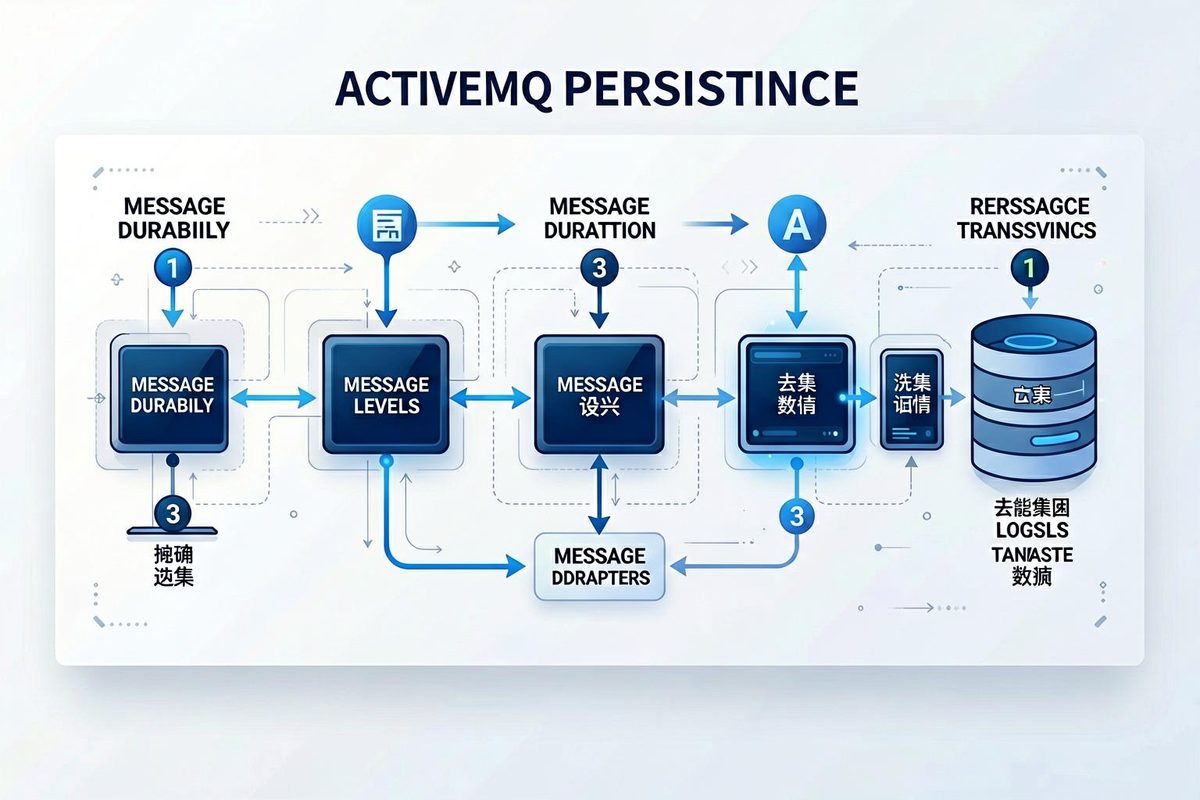
- Flexible persistence: supports multiple persistence methods such as JDBC, KahaDB, and LevelDB
- Rich clustering solutions: Master-Slave, Network of Brokers, and more
In subsequent articles in this series, we will dive deeper into ActiveMQ installation and configuration, persistence mechanisms, cluster deployment, plugin development, and other topics.
Series Navigation
This is Article 1 of the ActiveMQ Series. Upcoming articles include:
Stay tuned.
 微信
微信