Five Minutes to Learn Storm Coding: JStorm/Storm Coding Principles and Differences from Regular Java Programs
TL;DR Storm differs from traditional Java programs in three critical ways: the main method runs only on the submission node, initialization must happen in lifecycle methods, and all data transfers must be serializable.
Storm (and Alibaba’s open-source fork JStorm) is a distributed real-time computation framework. Its programming model has some key differences from traditional Java programs. If you don’t understand these differences, it’s easy to write code that runs fine locally but produces all sorts of bizarre bugs when deployed to a cluster.
This article doesn’t dive deep into Storm’s internals. Instead, it focuses on the few critical differences that developers most need to know — helping you get up to speed quickly and avoid common pitfalls.
A Quick Look at Storm’s Runtime
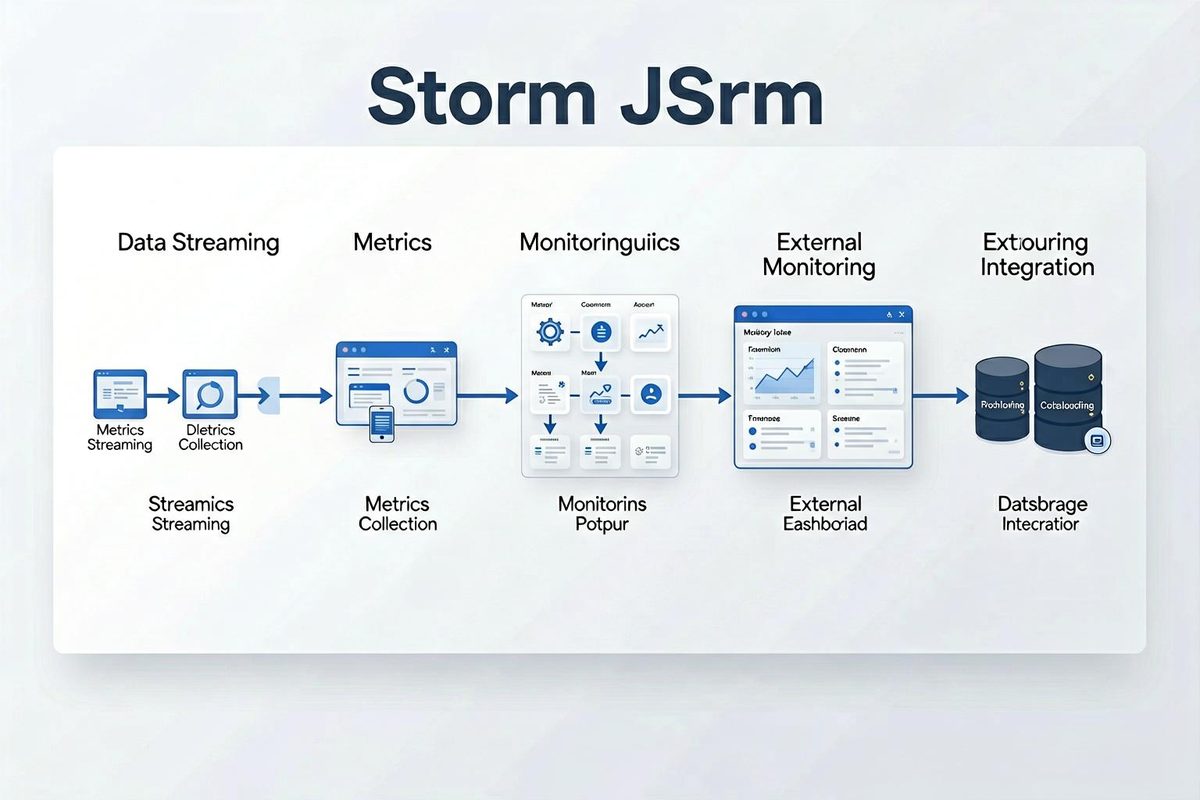
A Storm Topology consists of several Spouts (data sources) and Bolts (processing logic), distributed across multiple Workers (processes). A single Worker may simultaneously run multiple threads belonging to multiple Spouts/Bolts.
The key thing to understand is: your code gets serialized, distributed to each Worker, and executed there — not on the machine that submits the Topology.
Three Key Differences from Regular Java Programs
1. The main Method Only Runs on Nimbus
The main method only executes on the Nimbus (Storm’s master node) when submitting the Topology. Its sole purpose is to build the Topology structure and submit it — the actual Spout and Bolt code does not run in the same process as main.
What this means:
1 | // ❌ This won't work as you expect! |
Spring configurations, database connection pools, encryption keys, etc., must not be initialized in main. Only Storm’s own configuration items (Config object) and Topology structure building belong there.
2. Spout/Bolt Lifecycle
Each Spout and Bolt has its own lifecycle methods:
| Component | Initialization | Per-Message | Shutdown |
|---|---|---|---|
| Spout | open() |
nextTuple() |
close() |
| Bolt | prepare() |
execute() |
cleanup() |
Key points:
prepare()/open()runs once when the Worker process starts — this is the correct place for initialization. Spring containers, database connections, configuration loading — put them all here.- When multiple Bolts need to load Spring, use the same configuration: Multiple Bolts in the same Worker may share a JVM process. Repeatedly initializing Spring containers can waste resources or even cause conflicts.
1 | public class MyBolt extends BaseRichBolt { |
3. Serialization — The Most Common Pitfall
Since Spouts and Bolts may run on different Workers (even different machines), all data transmitted through Storm must be serializable:
- Tuples emitted via
emit() - Spout/Bolt member variables (if initialized in constructors or static blocks rather than in
prepare()) - Objects passed through configuration
Storm defaults to Kryo serialization, which is faster than Java’s native serialization, but has some requirements:
- Classes must have a public no-arg constructor. If a class lacks one (as with some third-party library classes), you’ll encounter
IllegalArgumentException - Inner classes and anonymous classes are not supported by default and need manual registration
If adding a no-arg constructor isn’t feasible, you can fall back:
1 | Config config = new Config(); |
A Complete WordCount Example
1 | // Spout: continuously emits sentences |
A 2026 Perspective
Storm was once the de facto standard for real-time computation, but in recent years Apache Flink has become the mainstream choice for stream processing. Flink offers better exactly-once semantics, richer window operations, and more mature state management. If you’re choosing a framework for a new project, I would recommend considering Flink first.
That said, if you’re maintaining an existing Storm/JStorm legacy system, the content in this article can still help you quickly identify issues. Once you understand Storm’s Worker model and serialization mechanism, many “mysterious production bugs” actually have traceable causes.
Source: https://lichuanyang.top/en/posts/27021/
 微信
微信