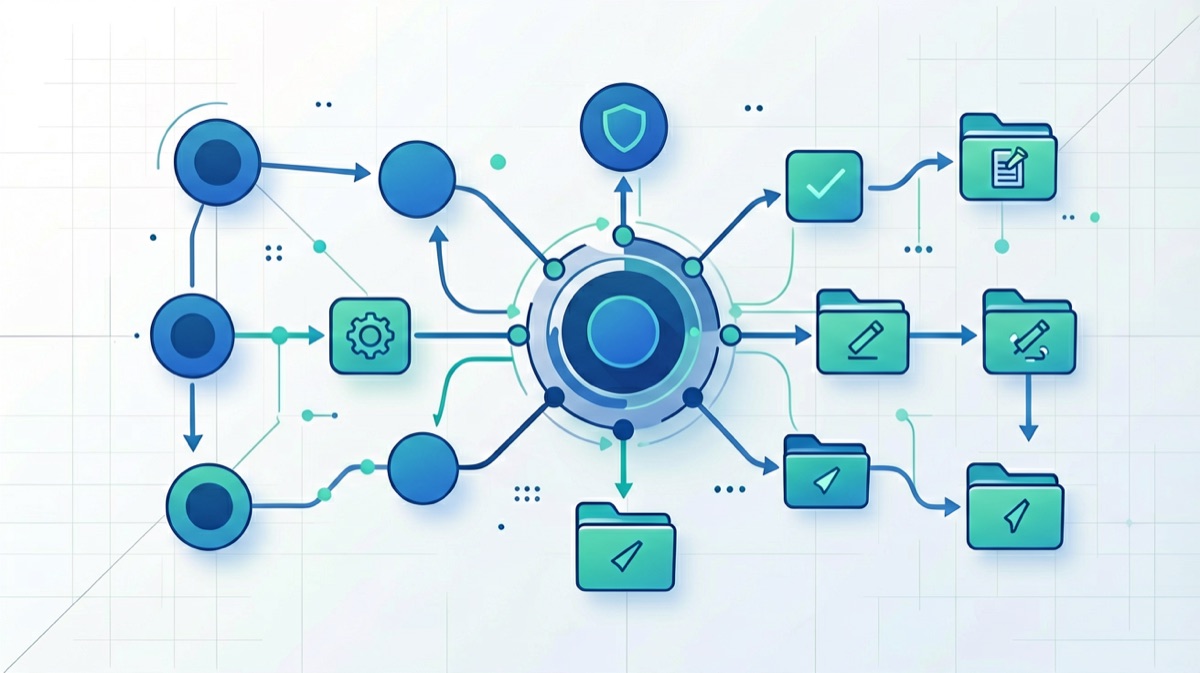
Book Notes: Thinking in Systems - How to Face Complex Problems in Reality
TL;DR System behavior is determined by feedback loops — solving complex problems requires finding leverage points, not just treating symptoms
The primary purpose of this book is to teach readers how to think more effectively when facing complex problems in reality. The book itself focuses on basic systems concepts, which are actually quite easy to understand. Additionally, the author provides numerous examples. When first reading this book, you might feel that the theory and practical examples are somewhat disconnected. But gradually you’ll realize that this topic is indeed not easy to explain in a way that’s easily accessible — it requires readers to put in more thought to gain substantive understanding. The examples provided by the author serve as excellent prompts for guiding readers to think. By following the author’s thinking through these examples, we can better grasp the concepts and logic presented in the book.
So, in these notes, I mainly extract some of the book’s core concepts in a relatively mechanical way, while also attempting to provide some everyday examples. For a better understanding of each section, I recommend reading the book itself and following the author’s reasoning to think through the logic of those examples.
Basic Concepts
A system is a set of interconnected things that interact with each other over time in specific behavioral patterns.
Any system consists of three components: elements, connections, and function or purpose.
Stocks are the foundation of all systems — such as water in a bathtub, population size, books in a bookstore, the volume of trees, money in the bank, and so on. However, stocks don’t necessarily have to be physical; your confidence, your good reputation among friends, or your hopes for the world can all be stocks.
Stocks change over time, and what causes these changes are “flows.”
Drawing stock-flow diagrams is a fundamental way to understand systems.
When a change in one stock affects the inflow or outflow associated with it, a feedback loop is formed.
Balancing loops and reinforcing loops are two common types of feedback loops — they’re quite intuitive and mean exactly what they sound like. Balancing loops tend to keep system stocks stable, while reinforcing loops continuously amplify and strengthen existing trends.
Common Systems
Next, let’s explore some common system models to help better understand what a system is.
Single-Stock Systems
System 1.1: A system with one stock and two opposing balancing loops, such as a thermostat, which uses a heating balancing loop and a cooling balancing loop to keep the stock (temperature) stable.
System 1.2: A system with one stock, one reinforcing loop, and one balancing loop, such as population — births form the reinforcing loop, and deaths form the balancing loop.
System 1.3: A system with time delays, such as inventory. Compared to a simple thermostat, the main difference is that there are delays in the balancing loops.
Double-Stock Systems
System 2.1: A system where a renewable stock is constrained by a non-renewable stock, such as extracting oil or other non-renewable resources. In this case, there are two stocks — capital and resources. There is a reinforcing loop: extracting resources generates profits, which increase capital, expand production capacity, and increase extraction. Meanwhile, since oil is non-renewable, extraction becomes increasingly difficult, forming a balancing loop.
System 2.2: A system with two renewable stocks, such as fisheries. It’s similar to the oil system, except fish are renewable resources, which leads to different developmental patterns compared to the previous system type.
Three Key Characteristics of Systems
Resilience. Systems have resilience because their internal structures contain many interacting feedback loops. These loops support each other, allowing the system to recover to its original state through various means even when subjected to major disturbances. The human body, for example, is a highly resilient system.
Self-organization. The ability of a system to make its own structure more complex is called “self-organization.” For systems, self-organization means the system can “evolve” on its own to accomplish larger goals or implement more complex functions. My former boss often told me our goal was to build a team with “self-organization” capabilities. Only then can the team progress alongside business development.
Hierarchy. As new structures emerge and complexity increases, self-organizing systems often generate hierarchies or levels. A large system contains many subsystems, which can be decomposed into even more, smaller subsystems. If each subsystem can basically maintain itself, perform certain functions, and serve the needs of a larger system — while the larger system is responsible for regulating and strengthening the operations of each subsystem — then relatively stable, resilient, and efficient structures can emerge and be maintained.
System Pitfalls
Everything we think we know about the world is just a model. Our models are usually highly consistent with reality. This is why we’ve become one of the most successful species on the planet. But our models are still far from being able to fully depict the world. This is why we often make mistakes and are frequently surprised.
So, let’s examine what problems can be identified from a systems perspective, to help us make fewer mistakes. The author mainly organized the following six points:
- System structure is the root cause of behavior, while system behavior manifests as a series of events over time; yet people tend to be misled by surface appearances
- In a nonlinear world, don’t use linear thinking patterns
- Need to appropriately define system boundaries
- Must be able to see various limiting factors
- Time delays are ubiquitous in systems
- People have only bounded rationality, leading to decisions that are often not globally optimal
System Traps and Countermeasures
This chapter covers more specific problems and potential countermeasures for addressing them.
Policy Resistance; Treating Symptoms Rather Than Root Causes
Some long-term behavioral patterns may not match people’s expectations and are often seen as problems. Despite people developing various technologies and implementing policy measures to “fix” them, the system seems stubborn, producing the same behavior year after year. This is a common system trap, commonly referred to as “treating symptoms rather than root causes” or “policy resistance,” such as drug proliferation and unemployment.
“Policy resistance” comes from the bounded rationality of various participants in the system, each with their own goals. When the goals of different subsystems are different or inconsistent, resistance to change emerges. The most effective way to address “policy resistance” is to try to align the goals of various subsystems — typically by establishing a larger overarching goal that allows all participants to transcend their individual bounded rationality.
Tragedy of the Commons
For resources shared by people, it’s easy for exploitation (or consumption) to gradually escalate or grow. An important reason the “Tragedy of the Commons” arises is that the feedback between resource consumption and the growth of resource users is missing, or the time delay is too long.
There are three ways to prevent the “Tragedy of the Commons”: first, education to help people see consequences more clearly; second, privatization of resources; third, implementing regulatory measures such as quota systems.
Drift to Low Performance
Performance standards are influenced by past performance, especially when people evaluate past performance too negatively — that is, focusing too much on bad news. This triggers a vicious cycle that continuously lowers both goals and system performance levels. In plain terms, it’s like boiling a frog — the situation deteriorates gradually without being noticed.
The countermeasure is to maintain an absolute performance standard. A better approach is to set the performance standard at the past best level, thereby continuously raising one’s own goals and using this to motivate improvement.
Escalation
“An eye for an eye, a tooth for a tooth.” Each participant’s desired system state is relative to other participants, and they try to surpass them, staying one step ahead — even being tied is unacceptable. Moreover, each participant tends to overestimate the other’s hostility and exaggerate the other’s strength. The system structure of escalation is a reinforcing loop that develops exponentially — once it exceeds a certain threshold, the speed at which competition intensifies will surpass most people’s imagination.
One countermeasure relies on one party making a concession; a more elegant approach is for both parties to reach an agreement.
Success to the Successful
Using accumulated wealth, power, special channels, or insider information can create even more wealth, power, channels, and information. These are all examples of another archetype called “Success to the Successful.”
Countermeasures: diversification — allowing the losing party in competition to exit and start a new game; antitrust laws — strictly limiting the maximum share the winner can hold; modifying competition rules — limiting the advantages of the strongest participants or giving special consideration to disadvantaged participants to enhance their competitiveness (such as charity, gifts, tax adjustments, transfer payments, etc.); giving diverse rewards to winners to prevent them from competing for the same limited resources or developing biases in the next round of competition.
Shifting the Burden
When facing a systemic problem, if the solution adopted doesn’t address the underlying root cause at all but merely alleviates (or masks) the symptoms, it will lead to shifting the burden, dependency, and addiction.
The best way to deal with this trap is prevention — don’t fall into the trap in the first place. Always be aware that policies or practices that merely alleviate symptoms or mask signals cannot truly solve problems.
Rule Beating
Any rules may have loopholes or exceptions, creating opportunities to beat the rules. This means that although some behaviors may appear to comply with or not violate the rules on the surface, they don’t actually align with the spirit of the rules, or even distort the system.
The countermeasure is to design or redesign rules, gaining creative feedback from rule-beating behaviors so that they serve a positive function and achieve the original purpose of the rules.
Goal Misalignment
System behavior is particularly sensitive to the goals of feedback loops. If goals are inaccurately or incompletely defined, even if the system faithfully executes all operational rules, the output may not be what people actually want.
The countermeasure is to appropriately set goals and indicators that reflect the true welfare of the system.
Ways to Change Systems: Leverage Points for Intervening in Systems
This section covers ways we can intervene in systems, ranked from least to most effective. Many of the theories in this chapter have probably been encountered elsewhere to some extent. Many excellent people, even without reading this book, actually think this way in many situations. The book “Thinking in Systems” helps us understand more systematically why we should do it this way.
12: Numbers — regulating the system through the numerical values of various flows. Like the balance designers in Honor of Kings, most of their energy goes into this: when a hero’s mechanics are too strong, they heavily nerf the numbers; when a hero isn’t performing well, they add numbers to make them viable even in simple face-to-face combat. This approach is actually quite low in effectiveness — it cannot change the fundamental structure of the system. But most people focus 90% of their attention on parameters.
11: Buffers — By increasing buffer capacity, we can usually stabilize the system. However, if buffers are too large, the system will become inflexible, and its response speed to changes will be too slow. At the same time, establishing, expanding, or maintaining buffer capacity requires significant time and capital, such as building reservoirs or warehouses. For this reason, some enterprises have invented “zero inventory” and “just-in-time” production models. In their view, compared to spending huge sums to maintain fixed inventory, the losses from occasional fluctuations or stockouts are not that significant.
Stock-flow structure: Physical systems and their intersection nodes. This mainly concerns the overall design of the system. Appropriate leverage points need to be designed correctly from the beginning. Once the physical structure is established, finding leverage points requires understanding the system’s limits and bottlenecks, maximizing their efficiency while avoiding major fluctuations or expansions that exceed their capacity. If the system is already running, adjusting key nodes becomes very difficult. The well-known “anti-corruption layer” concept in software engineering can optimize this problem to some extent by using pre-set intermediate layers to reduce the cost of adjusting key nodes.
Time delays: The speed at which the system responds to changes. Time delays are a high-leverage point, but in practice, time delays are usually not easy to change. The development of many things follows its own internal laws — it takes however long it takes. You can’t accumulate a large amount of capital overnight, children can’t grow up overnight, and pulling seedlings to help them grow faster won’t speed up crop growth. But if there’s a way to change time delays, it can often produce significant results. For example, in recent pandemic prevention and control efforts, the reason for frequently conducting large-scale nucleic acid testing is to reduce the time delay between virus transmission and detection.
Balancing loops: The feedback force that attempts to correct external influences. This is easy to understand — we can strengthen control over the system by adding balancing loops. The controllers in Kubernetes can be considered implementations of balancing loops, which use different controllers to control the values (stocks) of different components at their desired levels.
Reinforcing loops: The feedback force that drives the growth of returns. Similar to balancing loops, but with a different goal.
Information flows: The structure of who can access information. This is equivalent to a new loop that allows people to get feedback in places where they previously couldn’t. For example, the capitalistic practice of ranking overtime hours tells you about colleagues’ overtime information, naturally creating pressure that promotes overtime work.
System rules: Incentives, penalties, and constraints. This section essentially defines the scope, boundaries, and degrees of freedom of the system.
Self-organization: The force that increases, changes, or evolves system structure. Returning to the topic at the beginning, building a self-organizing team requires doing many things, such as improving each team member’s capabilities so everyone has decision-making ability, and enhancing information transparency within the team. Once such a team is built, not only will output improve qualitatively, but team members’ work satisfaction and happiness will also increase significantly.
Goals: The purpose or function of the system. A participant in the system can clearly set, articulate, repeat, support, and persist in new goals, thereby guiding the system’s transformation. This is why OKRs have become so popular in recent years. Through clear and reasonable OKRs, people are guided to make better decisions and take better actions.
Social paradigms: The mental models that determine what a system is. Some socially recognized concepts, some underlying basic assumptions, and widespread views about the nature of social reality constitute the social paradigm — or a whole worldview. These are a series of basic assumptions, rules, or beliefs that people generally hold about how the world works. These beliefs are implicit because in a society, almost everyone already knows them and thus there’s no need to specifically declare them. These paradigms naturally have a huge impact on system operations, and of course, changing them is more difficult than changing other things.
Transcending paradigms. Compared to changing paradigms, at a higher level, there is another leverage point: freeing oneself from the control of any paradigm. This point has a somewhat metaphysical quality, so we won’t elaborate much here. The core idea is that we need to consciously step outside the current system.
Rules for Living with Systems: Dancing with Systems
People who grew up in industrial society and are enthusiastic about systems thinking are likely to make a serious mistake. They may assume that through systems analysis, they can understand the interconnections and complex entanglements within systems, and with the power of computers, ultimately find the key to predicting and controlling systems. Unfortunately, this is a mistaken notion rooted in the deep-seated mental model of the industrial era — the belief that there exists a key to prediction and control. But in reality, achieving this is completely unrealistic. We need to recognize and be willing to give up the illusion of control, and adopt a completely different approach. This way, we can still make significant contributions. This approach is dancing with systems. We cannot control systems, but we can live better within them.
Next are some rules for dancing with systems — this section is essentially a collection of tips, all fairly easy to understand, so we’ll list them briefly:
- Keep up with the rhythm of the system: You need to observe how the system operates in order to keep up with it. We need to pay more attention to facts and data so as not to be led astray by other people’s theories.
- Expose your mental models to the light, draw system structure diagrams, force yourself to project various hidden assumptions from within, and express them precisely.
- Trust, respect, and share information
- Use language carefully and enrich it with systems concepts
- Focus on what’s important, not just what’s easy to measure
- Design policies with feedback functions for feedback systems. For dynamic, self-regulating feedback systems, static, rigid policies cannot be used for regulation. Good policies must be able to flexibly adjust in a timely manner according to changes in system state.
- Pursue overall interests
- Listen to the wisdom of the system
- Define system responsibilities
- Stay humble, be a learner
- Celebrate complexity
- Expand the time horizon
- Break through various taboos and rigid rules
- Expand the scope of concern
- Don’t lower the standards of “good”
 微信
微信