Are High-Concurrency Solutions Really That Hard? A Casual Guide to High-Concurrency Design
TL;DR High concurrency is fundamentally about reducing connections to a single database — six progressive layers: system decomposition → caching → MQ peak shaving → sharding → heterogeneous storage → rate limiting, each layer reduces database pressure.
Does high request concurrency always lead to high-concurrency problems? Not necessarily. Imagine an application that does nothing but in-memory computation — no matter how high the request volume, you could simply add more machines to scale linearly. There would be no “high-concurrency problem” to speak of.
High-concurrency problems exist because the system has a single-point bottleneck that can’t be solved by brute-force scaling. And in over 90% of cases, that bottleneck is the database.
The Core Idea: Reduce Connections to a Single Database
At their heart, all high-concurrency technical solutions are doing the same thing — reducing the number of concurrent connections a single database instance must handle. Around this goal, there are six layers of techniques:
Layer 1: System Decomposition (Business Dimension)
The coarsest optimization: physically separate databases for different business modules.
1 | Monolith: All services → One database (1000 QPS) |
Each business gets its own dedicated database, operating independently. The challenge with splitting is distributed transactions — what used to be handled in a single transaction now spans multiple databases. Solutions include the Saga pattern, Seata, and RocketMQ transactional messages.
Layer 2: Caching (Reduce Database Hit Rate)
Add a Redis layer between the application and the database. Hot data is served from the cache, and only cold data hits the database.
1 | Request → Cache (90% hit) → Return |
Key decisions in cache architecture:
| Problem | Solution |
|---|---|
| Cache Penetration | Bloom filter, null-value caching |
| Cache Breakdown | Mutex lock, logical expiration |
| Cache Avalanche | Randomized TTL, multi-level caching |
| Cache Consistency | Cache Aside pattern (update DB first, then delete cache) |
Layer 3: MQ Peak Shaving (Smooth the Traffic)
When traffic surges like a flood, the message queue acts as a “reservoir”:
1 | 100K QPS → MQ → 1000 QPS steady consumption → Database |
Take flash sales as an example: 100,000 users place orders simultaneously, but the database can only handle 1,000 per second. Use RocketMQ/Kafka as a buffer — requests enter the queue first, and backend services consume at their own pace. The user experience changes to “waiting in line” instead of “system crash.”
Layer 4: Sharding & Table Splitting (Within a Single Business)
When even a single business’s database can’t keep up, split it further:
- Vertical splitting: Split by columns — user basic info in one table, user extended info in another
- Horizontal splitting (sharding): Split by rows — user_0, user_1, user_2… routed by user_id modulo
- Read-write separation: Primary for writes, replicas for reads — ideal for read-heavy workloads
The key to sharding is choosing the right sharding key — make sure most queries land on a single shard to avoid cross-shard queries. ShardingSphere is currently the most popular sharding middleware.
Layer 5: Heterogeneous Storage (The Right Engine for the Right Job)
MySQL isn’t a silver bullet. Different query types call for different storage engines:
| Engine | Strengths | Use Cases |
|---|---|---|
| MySQL | Transactions, joins | Core business data |
| Elasticsearch | Full-text search, aggregations | Product search, log queries |
| ClickHouse | OLAP analysis, massive aggregations | User behavior analysis, BI reports |
| Redis | Ultra-high QPS, simple KV | Caching, counters, leaderboards |
| HBase | Massive sparse data, wide tables | User profiles, time-series data |
Layer 6: Rate Limiting & Circuit Breaking (Last-Resort Protection)
The previous layers are “best effort” — rate limiting ensures the lower bound: even if the system can’t handle it all, don’t let the whole thing collapse.
Common rate-limiting algorithms:
- Token Bucket (Guava RateLimiter): Tokens are added at a steady rate; requests consume tokens. If no token is available, the request is rejected.
- Leaky Bucket: Requests pour in like water; the bucket leaks at a fixed rate. If the bucket is full, the request overflows (is rejected).
- Sliding Window (Sentinel): Counts requests within a time window; rejects when the threshold is exceeded.
Circuit Breaker: When a downstream service keeps failing, stop making futile calls — fail fast and give the downstream room to recover. The evolution path: Hystrix (discontinued) → Resilience4j → Sentinel.
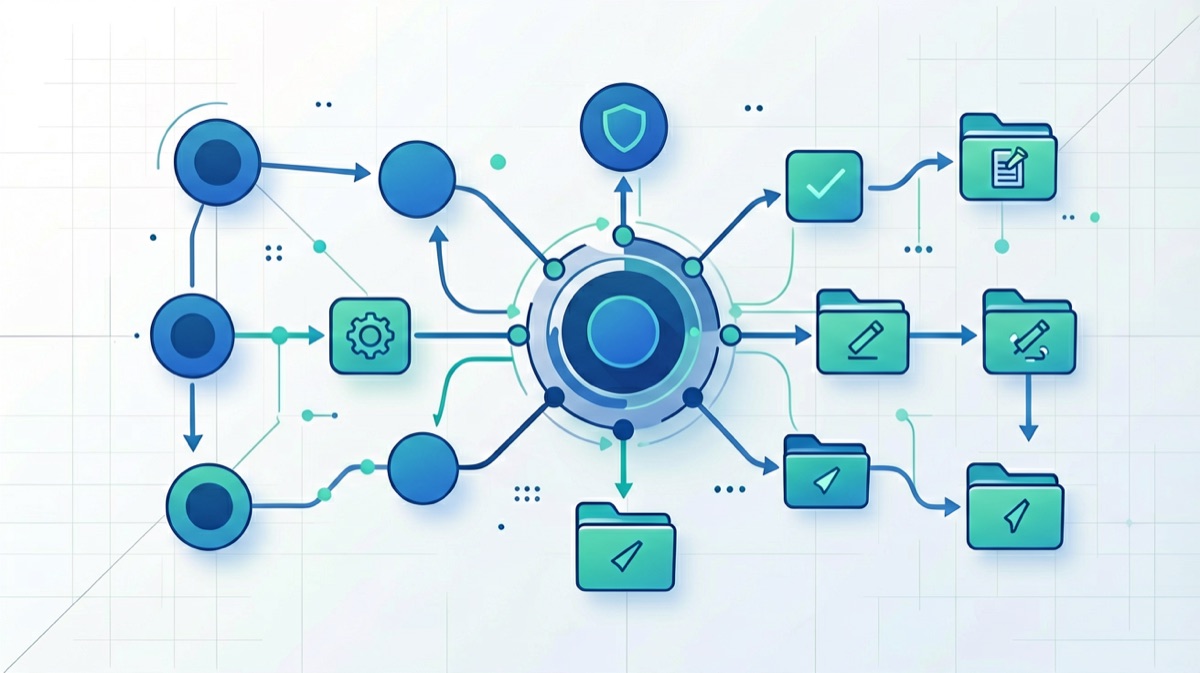
High-Concurrency Architecture Overview
1 | ┌──────────────┐ |
Pool Tuning (Connection Pools & Thread Pools)
Various “pools” are essentially a form of rate limiting themselves:
- Tomcat Thread Pool: Caps the number of concurrent HTTP requests
- Database Connection Pool (HikariCP): Caps the number of concurrent connections to the database
- Thread Pools: Caps the number of concurrently executing tasks
Tuning principles:
- Don’t make pools too large: Exceeding the database’s capacity means everything slows down
- Don’t make pools too small: Resources go underutilized
- Monitor everything: activeCount, queueSize, waitCount — if any of these approach their limit, it’s time to scale up
Summary
High concurrency is fundamentally a “traffic management” problem. Six layers of techniques progressively reduce the connection load on a single database, from coarse to fine:
System Decomposition → Caching → MQ Peak Shaving → Sharding → Heterogeneous Storage → Rate Limiting & Circuit Breaking
Once you grasp this core thread of “reducing connections to a single database,” you’ll see that various high-concurrency techniques aren’t scattered tricks — they form a clear, layered system.
 微信
微信